Anleggsutstyr — Feltveiledning
Hva er en konstruksjonsløfter, og hvordan skiller den seg fra en standard heis?
En nærmere titt på den midlertidige maskinen som frakter arbeidere og materialer opp i en uferdig bygning – og hvorfor den nesten ikke har noe til felles med heisen som venter på deg på kontoret.
Det direkte svaret
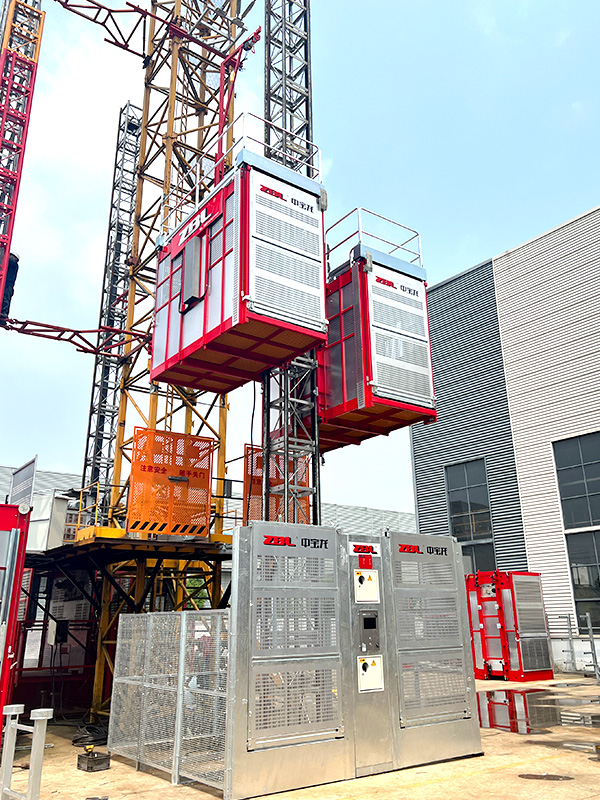
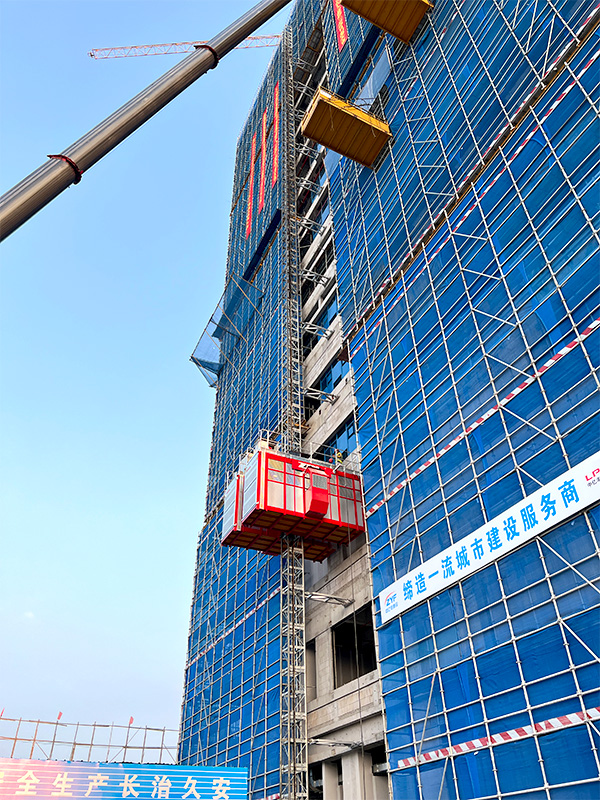
En konstruksjonsløfter er en midlertidig vertikal transportmaskin installert på utsiden av en bygning under bygging, designet for å frakte arbeidere, verktøy og materialer mellom bakkenivå og øvre etasjer.
I motsetning til en personheis bygget inn i den permanente strukturen til en ferdig bygning, en talje for bygningskonstruksjon er et tannstang- eller ståltaudrevet merdsystem som er boltet til en mastekonstruksjon, forlenget når bygningen reiser seg, og fjernet når konstruksjonen er fullført. Kort sagt finnes en konstruksjonsløfter for å løse ett problem: flytte mennesker og tung last raskt og sikkert på en arbeidsplass der det ennå ikke finnes en ferdig heissjakt.
Kjerneskillet mellom en konstruksjonsheis og en standardheis kommer ned til formål, varighet og konstruksjon. En standard heis er en permanent armatur designet for flere tiår med jevn, stille passasjerservice inne i en ferdig sjakt. A konstruksjon heis heis er en midlertidig, robust maskin konstruert for å tåle støv, vær, vibrasjoner og konstant kraftig sykling, og deretter demonteres og flyttes til neste prosjekt.
Konstruksjonsløft vs. standard heis
Mens begge maskinene flytter mennesker og varer vertikalt, er den tekniske filosofien bak hver enkelt fundamentalt forskjellig. Sammenligningen nedenfor bryter ned de praktiske forskjellene et prosjektteam bør forstå før de spesifiserer utstyr.
| Funksjon | Konstruksjonsløft | Standard heis |
|---|---|---|
| Installasjonssted | Utvendig mast festet til bygningens fasade | Vedlagt innvendig sjakt |
| Drivmekanisme | Trekkstang med tannstang eller ståltau | Trekkkabel eller hydrauliske stempler |
| Typisk levetid på stedet | Kun varighet av byggeprosjektet | 15 til 25 år eller lenger |
| Fokus på lastekapasitet | Tunge byggevarer pluss personell | Passasjerer og lett last |
| Væreksponering | Fullt utsatt for vind, regn og støv | Helt lukket og klimabeskyttet |
| Mobilitet | Avtakbar og gjenbrukbar på fremtidige prosjekter | Fast for bygningens levetid |
Fordi a konstruksjon heis heis er boltet direkte til stillaset eller en uavhengig mast i stedet for i en ferdig sjakt, må dens strukturelle utforming ta hensyn til vindbelastning, termisk ekspansjon og gjentatt festing og løsgjøring ettersom masten vokser seg høyere med bygningen. Dette er grunnen til at taljer gjennomgår en helt annen sertifiserings- og inspeksjonsprosess enn permanente heiser.
Hovedkomponenter i en konstruksjonsløfter
Hver konstruksjonsløfter, uavhengig av produsent eller kapasitet, er bygget av et konsistent sett med kjernekomponenter. Å forstå disse delene hjelper stedets team med å kommunisere tydelig med leverandører og inspektører.
konstruksjon heis heis
Mastseksjoner
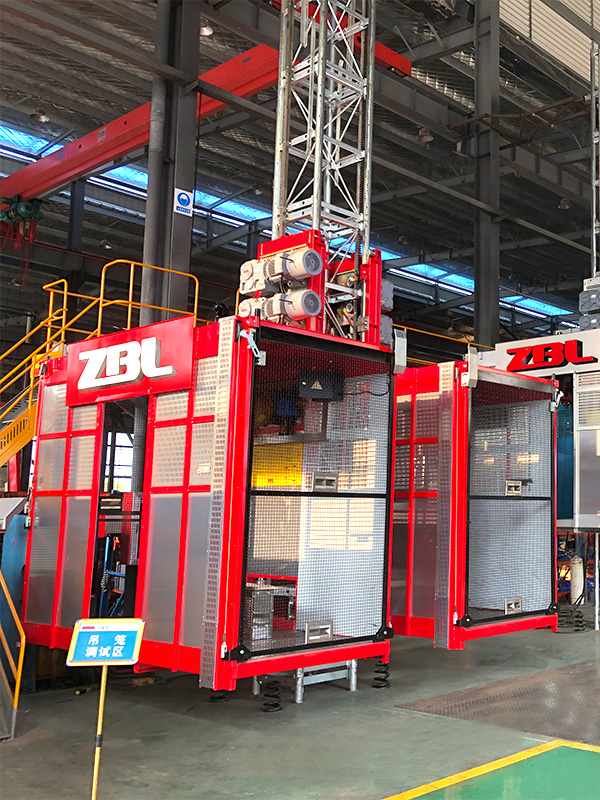
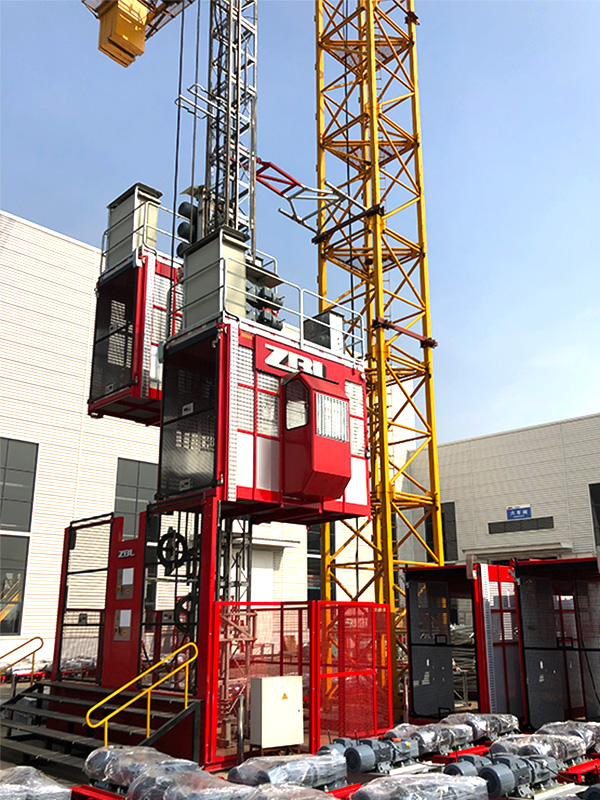
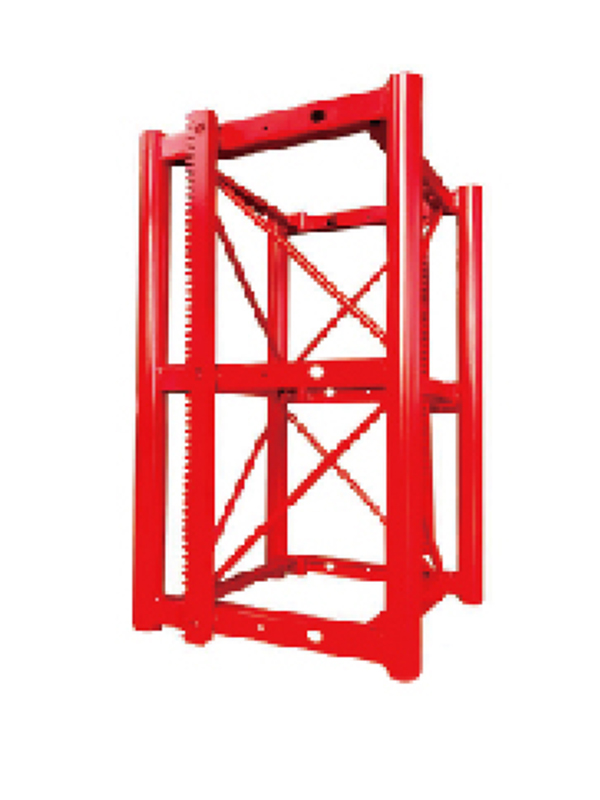
Masten er det vertikale gittertårnet i stål som buret reiser langs. Mastseksjoner, typisk rundt 1,5 til 3 meter hver, legges til trinnvis etter hvert som bygningen reiser seg, og festes deretter til strukturen med jevne mellomrom med veggfester.
Bur eller bil
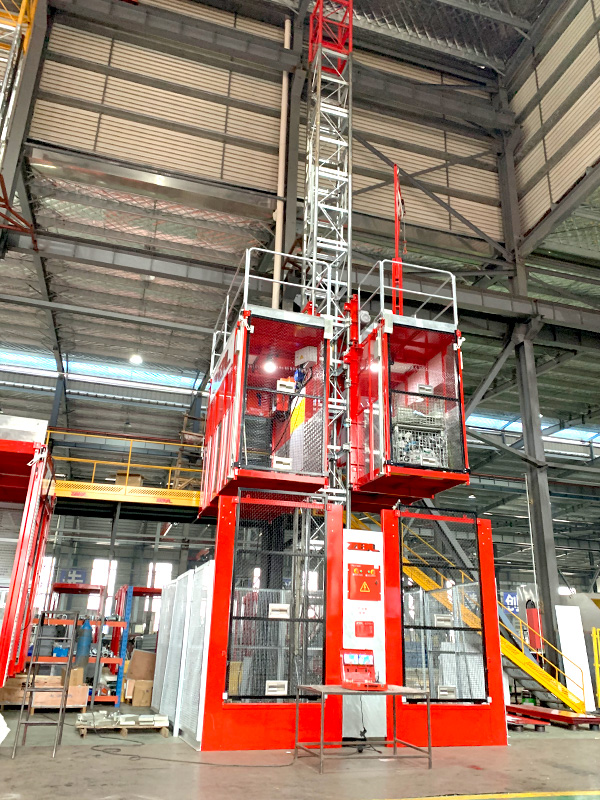
Buret er den lukkede plattformen som bærer arbeidere og materialer. Den inkluderer sikkerhetsporter, en nødstoppknapp, overbelastningssensorer, og i de fleste moderne design, et digitalt display som viser gulvposisjon og laststatus.
Drivenhet og motor
Drivenheten huser den elektriske motoren og girkassen som griper inn i mastens tannstangtenner. De fleste enheter bruker redundante bremsesystemer slik at hvis en motor eller brems svikter, stopper en sekundær sikkerhetsmekanisme buret umiddelbart.
Base- og landingsplattformer
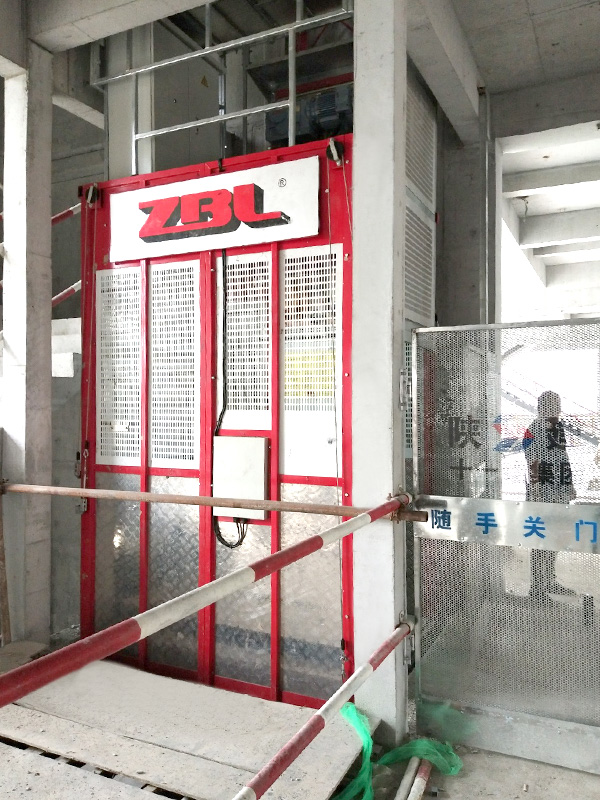
Basen forankrer masten til et betongfundament på bakkenivå, mens landingsplattformer i hver etasje gir et trygt, plant overføringspunkt mellom merden og bygningens arbeidsdekk.
Hvordan en konstruksjonsløfter fungerer mekanisk
De fleste moderne taljer er avhengige av et tannstang-drivsystem. En tannstang i stål løper i hele mastens lengde, og et tannhjul montert på burets drivenhet roterer mot det, trekker buret oppover eller senker det på en kontrollert måte. Denne designen tilbyr presis hastighetskontroll og er stort sett upåvirket av kabelstrekk, og det er derfor den har blitt den dominerende teknologien for en talje for bygningskonstruksjon sammenlignet med eldre ståltausystemer.
Sikkerhetsredundans er innebygd i den mekaniske designen - hvis buret overskrider den nominelle hastigheten, klemmer mekaniske sikkerhetskjever seg fast på stativet umiddelbart, og stopper det innen kort avstand.
Kombinert med brytere for overbelastning og dørlåser som hindrer bevegelse med mindre portene er helt lukket, er denne lagdelte sikkerhetstilnærmingen sentral for hvordan taljer opprettholder sterke sikkerhetsrekorder til tross for at de opererer under tøffe forhold på stedet.
Info
En sentrifugal sikkerhetsanordning overvåker kontinuerlig nedstigningshastighet på hver sertifisert talje, og gir et mekanisk beskyttelseslag uavhengig av det elektroniske kontrollsystemet.
Typer konstruksjonsløftere
Ikke alle prosjekter trenger det samme utstyret. Valg av riktig taljekategori avhenger av byggehøyde, forventet trafikkmengde og balansen mellom person- og materialtransport.
- Enkeltbur-taljer: Én bil som opererer på en enkelt mast, egnet for mindre eller middels høye prosjekter med moderat trafikk.
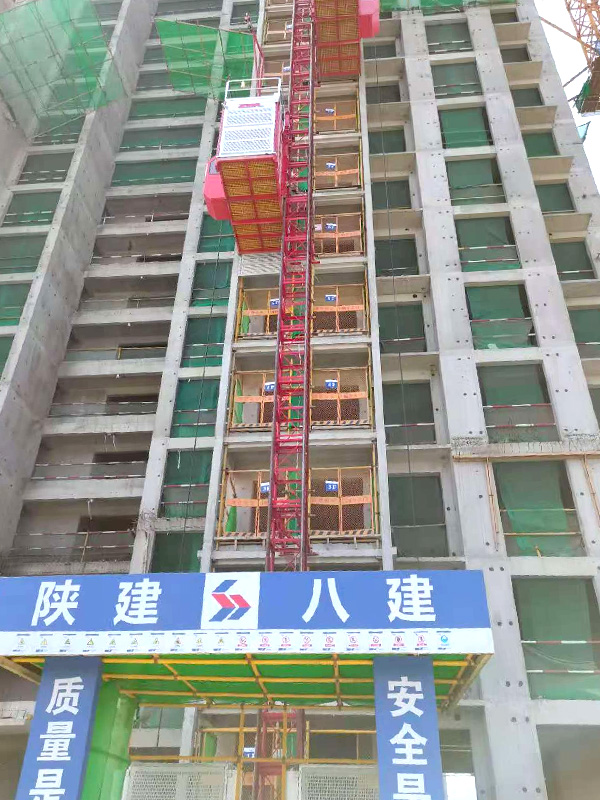
- Twin-cage eller double-cage taljer: To uavhengige biler som deler én mastestruktur, dobler gjennomstrømmingen for høyhusprosjekter med tungt personell og materialflyt.
- Taljer kun for material: Forenklede enheter uten passasjersertifisering, brukes kun til transport av forsyninger, forskaling og rusk.
- Passasjer- og materialløfter: Den vanligste konfigurasjonen på moderne arbeidsplasser, sertifisert for å flytte både arbeidere og last innenfor nominelle grenser.
Lastekapasitet, hastighet og høydeområde
Lastekapasiteten varierer betydelig etter modell og bruksområde. Lette taljer på mindre boligprosjekter kan vurderes rundt 1000 til 2000 kg , mens tunge enheter på store kommersielle tårn vanligvis håndterer 2000 til 3200 kg per bur, med noen spesialiserte tvillingbursystemer som overskrider 6.000 kg kombinert kapasitet . Løftehastigheten varierer vanligvis fra 30 til 96 meter per minutt, med raskere enheter reservert for superhøye prosjekter der vertikal reisetid direkte påvirker arbeidseffektiviteten.
Maksimal brukshøyde avhenger av mastestyrke og antall veggbindere som brukes, men mange standardsystemer er klassifisert for bygninger opptil 200 meter , med forsterkede mastekonfigurasjoner tilgjengelig for superhøye skyskraperprosjekter. Fordi en konstruksjonsløfter er midlertidig infrastruktur, må dens kapasitet og høydeklassifisering alltid tilpasses det spesifikke prosjektets strukturplan i stedet for antatt fra et generisk spesifikasjonsark.
Sikkerhetsfunksjoner og regulatoriske standarder
Fordi a hoist carries workers alongside heavy materials in an exposed environment, safety engineering is non-negotiable. Reputable equipment and installations should include the following features as a baseline.
- Overbelastningsdeteksjon som automatisk deaktiverer bevegelse når vekten overskrider den nominelle grensen
- Mekaniske sikkerhetsbremser som kobles inn uavhengig av hoveddrivmotoren
- Dør- og portlåser hindrer drift med åpent inngangspunkt
- Nødstoppkontroller tilgjengelig fra innsiden av buret
- Vindmålere som stopper driften automatisk ved sterk vind
- Regelmessige tredjeparts lasttesting og strukturelle inspeksjonssertifikater
Fare
Aldri overstyr en overbelastningssperre eller bruk en talje med deaktivert dørsperre. Disse systemene eksisterer spesifikt for å forhindre fritt fall og klemhendelser i utsatte vertikale sjakter med høy trafikk.
I de fleste jurisdiksjoner må en konstruksjonsløfte inspiseres og sertifiseres før igangkjøring, og deretter inspiseres på nytt med planlagte intervaller gjennom hele prosjektet. Operatører er vanligvis pålagt å ha spesifikk opplæring eller lisensiering, forskjellig fra generelle utstyrsoperatørsertifiseringer, gitt de unike risikoene ved utvendig, utsatt drift.
Hvordan en konstruksjonsløfter installeres
Installasjonen begynner med et armert betongfundament designet for å tåle den fulle statiske og dynamiske belastningen fra masten og buret. Basismastseksjonene reises først, etterfulgt av drivenheten og den første burmonteringen. Etter hvert som bygningen reiser seg, legges det til flere masteseksjoner fra selve merden, med veggfester som forankrer masten til bygningsfasaden med intervaller spesifisert av konstruksjonsingeniøren, typisk annenhver til tredje etasje avhengig av vindeksponering og mastehøyde.
Advarsel
Taljen må tas offline og re-sertifisert etter hver betydelig masteutvidelse. Å hoppe over denne trinnvise re-sertifiseringen er en av de vanligste årsakene til hendelser på stedet som kan forebygges.
Denne trinnvise installasjonstilnærmingen er en av de tydeligste operasjonelle forskjellene fra en standard heis, som er installert en gang inne i en ferdig sjakt og ikke krever pågående strukturell utvidelse under bruk.
Velge riktig konstruksjonsløft for prosjektet ditt
Å velge riktig enhet starter med en ærlig vurdering av prosjektskalaen. Et lavt boligbygg med lett materialflyt rettferdiggjør sjelden et system med to bur, mens et kommersielt tårn med hundrevis av arbeidere som beveger seg daglig raskt vil ha en flaskehals på et enkelt lite merd. Nøkkelvalgfaktorer inkluderer anslått daglig passasjervolum, vekten og dimensjonene til de tyngste materialene som skal transporteres, endelig byggehøyde og plass tilgjengelig for bakkenivå og lasteplattformer.
Budsjettplanlegging bør også veie leie kontra kjøp. Leie a talje for bygningskonstruksjon er det mer vanlige valget for enkeltprosjekter, siden det unngår langsiktige lagrings-, vedlikeholds- og flyttekostnader, mens entreprenører som kjører kontinuerlige flerårige rørledninger med høyhusarbeid kan finne det mer kostnadseffektivt å kjøpe over tid.
Vedlikehold og levetid
Fordi a construction hoist operates continuously in dusty, wet, and variable-temperature conditions, maintenance schedules are typically far more frequent than those for an indoor elevator. Daily pre-shift checks should cover brake response, door interlocks, and unusual noise from the drive unit, while weekly maintenance addresses lubrication of the rack-and-pinion system and inspection of wall tie connections. Monthly and quarterly service intervals typically include full load testing and a detailed structural inspection of the mast.
Suksess
Med riktig vedlikehold kan en godt bygget talje forbli i aktiv tjeneste på tvers flere prosjekter i 10 år eller mer , selv om den tilbringer bare måneder om gangen på en enkelt jobbside.
I sammendrag
En konstruksjonsheis og en standard heis løser det samme grunnleggende problemet – flytting av mennesker og varer vertikalt – men nesten alt om hvordan de er bygget, sertifisert og betjent avviker. Den ene er midlertidig, utvendig og konstruert for tøffe, skiftende forhold; den andre er permanent, innelukket og bygget for flere tiår med stille tjeneste. Å forstå denne forskjellen er det første skrittet mot å spesifisere, installere og betjene riktig utstyr for enhver vertikal konstruksjon.